
If you are planning an arcade, family entertainment center, shopping mall game zone, or claw machine store, one of the first questions is simple: how much does a claw machine cost?
The answer is less simple.
A small claw machine may cost only a few hundred dollars, while a large commercial or multi-player model can cost several thousand dollars. Cabinet construction, claw mechanism, payment system, customization, order quantity, shipping method, and destination country can all change the final investment.
For a commercial buyer, the most useful question is therefore not just “What is the claw machine price?” but:
“What will this machine cost after it is configured, shipped, imported, installed, stocked with prizes, and ready to earn revenue?”
This guide breaks down the major cost factors so arcade and FEC buyers can compare quotations more accurately.
How Much Does a Claw Machine Cost?
Based on publicly available commercial buying guides and supplier pricing published in 2026, claw machine prices can range from a few hundred dollars for compact models to more than $10,000 for large-format or multi-player commercial machines.
A useful general reference is:
| Claw Machine Type |
Indicative Price Range |
Typical Application |
|---|---|---|
| Mini / countertop machine | $300–$1,200 | Cafés, counters, small retail spaces |
|
Standard commercial machine |
$800–$3,500 | Arcades, malls, cinemas, FECs |
| Large / premium machine | $2,500–$7,000+ | High-traffic arcades and prize zones |
|
Multi-player / jumbo machine |
$4,000–$12,000+ | Large FECs and destination venues |
A $900 factory quotation and a $2,000 distributor quotation may not represent the same package. Freight, warranty support, certification, payment hardware, local service and spare parts may be handled differently.
That is why serious B2B buyers should compare configuration rather than price alone.
Claw Machine Cost by Type
Mini Claw Machines
Mini claw machines are designed for small prizes and locations where floor space is limited.
They are commonly used for:
- Capsules
- Small plush toys
- Candy
- Small collectibles
- Blind-box style products
Public 2026 buying guides commonly place compact commercial models in the several-hundred-dollar to roughly $1,200 range, depending on configuration and purchasing channel.
Their lower purchase cost can make them attractive for operators testing a new location.
However, buyers should still check commercial durability. A small cabinet built for continuous public use is different from a consumer tabletop toy.
Standard Commercial Claw Machines
The standard single-player cabinet is the most common format for arcades, FECs, malls and cinemas.
Depending on supplier, cabinet quality and sales channel, published prices generally range from under $1,000 at the factory-direct end to several thousand dollars through retail or distributor channels.
For many operators, this category offers the best balance between:
- Prize capacity
- Floor space
- Visual impact
- Maintenance access
- Payment flexibility
- Purchase cost
Large and Premium Claw Machines
Larger cabinets are often designed for oversized plush toys, premium gifts or stronger visual presentation.
They may include:
- Larger prize chambers
- Wider claws
- Advanced LED lighting
- Large display panels
- Custom themes
- Premium cabinet materials
- Cashless payment systems
The larger cabinet also means more material, more packing volume and potentially higher international freight costs.
Multi-Player Claw Machines
Two-player or four-player configurations can serve several customers at the same time.
They are usually more expensive than a standard single-player machine, but operators should evaluate them based on cost per playing station rather than machine price alone.
A four-player cabinet costing several times more than a mini claw machine may still make sense if it creates higher throughput in a busy FEC.
What Affects Claw Machine Price?
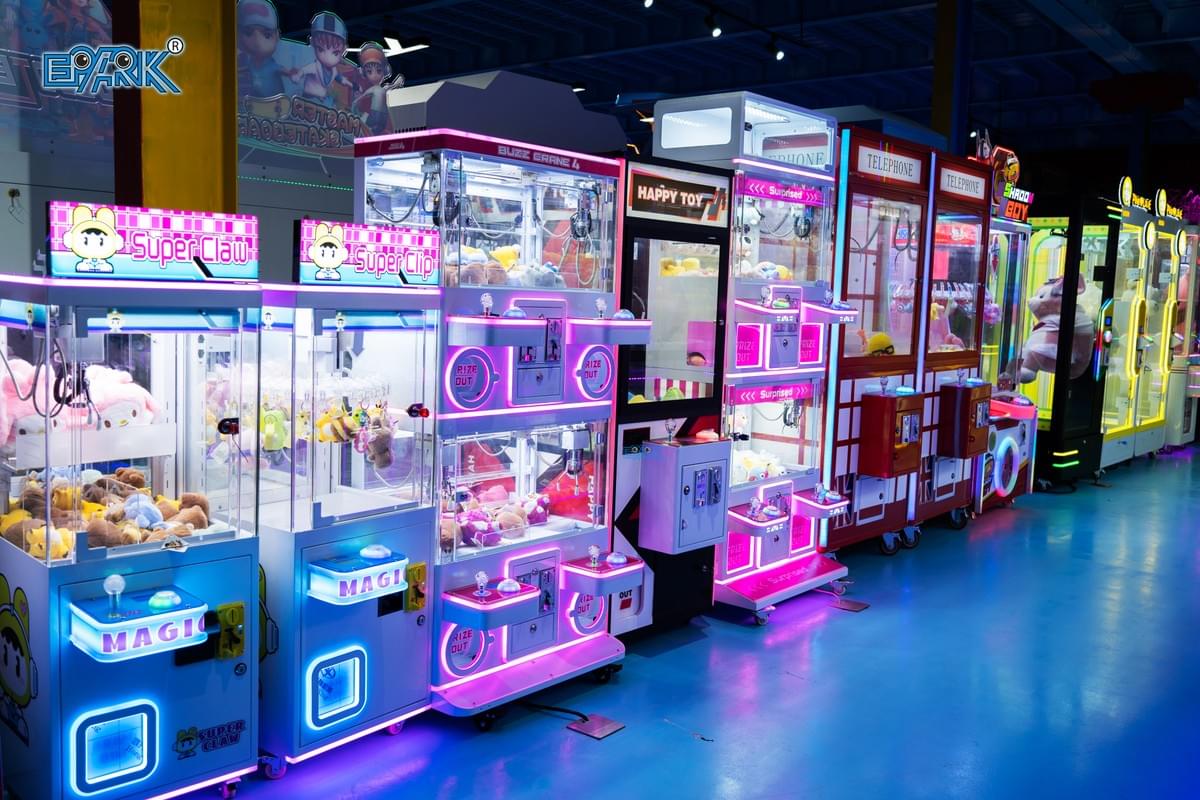
Two machines that look similar in an online photo can have very different internal specifications.
1. Cabinet Size and Construction
Larger cabinets require more steel, glass, lighting components and packaging materials.
Commercial buyers should compare:
- Cabinet dimensions
- Material thickness
- Glass specification
- Door construction
- Locks
- Internal structure
- Service access
- Packed dimensions
The cheapest cabinet is not always the lowest-cost machine over several years of operation.
2. Claw and Gantry System
The mechanical system directly affects gameplay and maintenance.
Price differences can come from:
- Motor quality
- Gantry construction
- Claw size
- Claw motor
- Wiring
- Movement accuracy
- Adjustable strength settings
If you already know which prizes you want to use, provide their dimensions and weight to the manufacturer.
3. Payment System
A basic coin acceptor is normally less expensive than a configuration containing:
- Bill acceptor
- RFID card reader
- Membership system
- QR payment
- Cashless arcade system
- Third-party payment hardware
For an existing FEC, compatibility with the venue's payment ecosystem may matter more than saving a small amount on the original machine.
EPARK's supplied company information indicates that payment configurations can be customized for coin, membership card and QR-based systems depending on project requirements.
4. Customization
OEM and ODM requirements can affect claw machine cost.
Customization may include:
- Logo
- Cabinet color
- Artwork
- Lighting
- Control panel
- Cabinet structure
- Game interface
- Prize display
- Payment configuration
A distributor ordering a branded product line will therefore receive a different quotation from an arcade purchasing a standard factory model.
5. Voltage and Destination Market
Commercial equipment should be configured for its destination.
EPARK supports 110V and 220V configurations as well as different regional plug standards. Exact requirements should be confirmed for each model and market before production.
6. Order Quantity
Wholesale orders may reduce the per-unit manufacturing or logistics cost.
However, buyers should ask exactly where the saving comes from:
- Machine price
- Packaging
- Consolidated freight
- Spare parts
- Customization
- Container utilization
7. Certification and Documentation
Export requirements may affect cost.
For example, CE marking applies only where relevant EU harmonized legislation requires it. The manufacturer is responsible for identifying applicable requirements, carrying out conformity assessment and preparing the necessary technical documentation and declaration.
Buyers should therefore confirm documentation for the specific model and destination, rather than relying only on a CE logo in a catalog.
Machine Price vs. Total Landed Claw Machine Cost
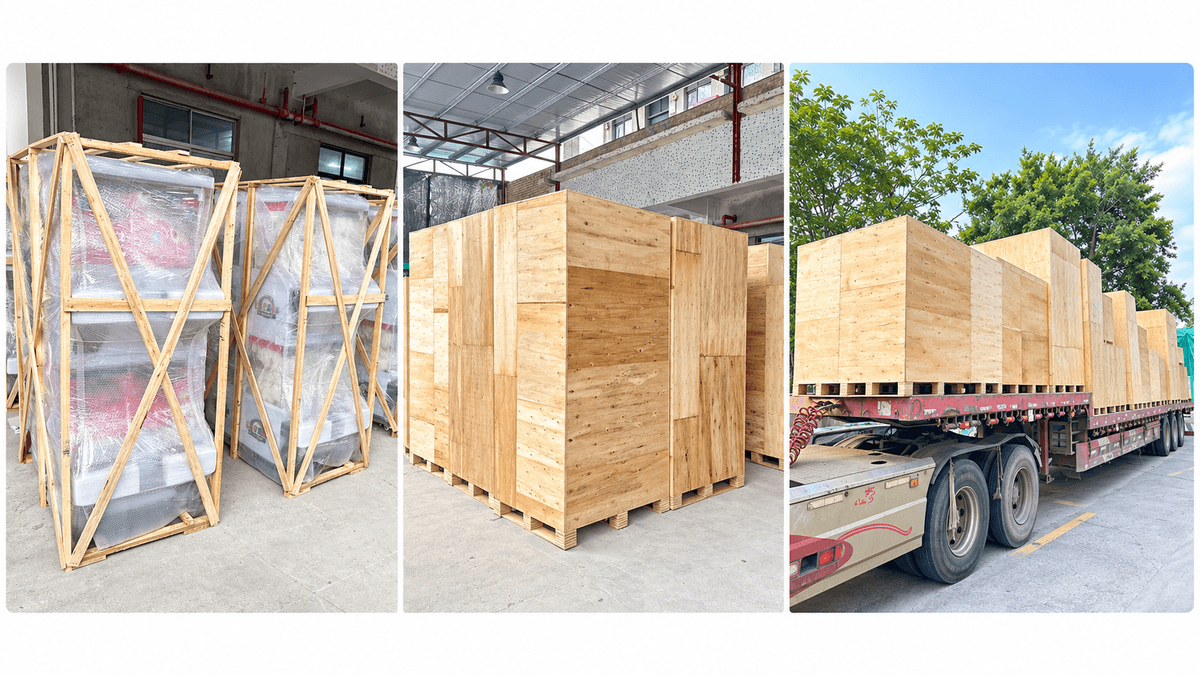
One of the biggest mistakes in international purchasing is treating the supplier quotation as the complete budget.
The U.S. International Trade Administration defines landed cost as including the original product price plus items such as insurance, freight, tariffs, taxes and other fees.
For an imported claw machine, your budget may include:
Total Landed Cost = Machine + Packaging + Freight + Insurance + Duty/Tax + Customs Fees + Inland Delivery + Installation
You may then have additional operating investment:
- Prize inventory
- Payment system
- Spare parts
- Store decoration
- Marketing
- Rent or revenue share
- Staff
- Maintenance
For this reason, a machine with a factory price of $1,000 does not necessarily represent a $1,000 investment.
New vs. Used Claw Machines: Which Costs Less?
Used equipment normally has a lower upfront purchase price, but price alone is not enough to decide.
A Used Machine May Make Sense When:
- You can inspect it locally.
- Replacement parts are readily available.
- The cabinet is in good condition.
- The control system is still supported.
- You only need one or two machines.
- You are testing a location.
A New Machine May Make More Sense When:
- You are opening a new arcade.
- You need several matching cabinets.
- You require branding.
- You need a specific payment system.
- You are importing equipment internationally.
- You need documentation and after-sales support.
A used machine becomes expensive quickly if the main board, claw motor, power supply or payment hardware needs replacement shortly after installation.
For B2B buyers, compare total usable cost, not simply acquisition price.
Factory Direct vs. Local Distributor
Another major factor affecting claw machine cost is where you buy it.
| Factor | Factory Direct | Local Distributor |
|---|---|---|
| Initial price | Often lower | Usually higher |
| Customization | Usually more flexible | May be limited |
| Minimum quantity | May apply | Often easier for single units |
|
International freight |
Buyer must consider | Usually already handled |
| Local support | Mainly remote | Potentially faster |
| Spare parts | Factory supply | May carry local stock |
| Delivery |
Longer international process |
Often faster |
| Import procedures | Buyer/importer manages |
Typically incorporated into local purchase |
FactorFactory DirectLocal DistributorInitial priceOften lowerUsually higherCustomizationUsually more flexibleMay be limitedMinimum quantityMay applyOften easier for single unitsInternational freightBuyer must considerUsually already handledLocal supportMainly remotePotentially fasterSpare partsFactory supplyMay carry local stockDeliveryLonger international processOften fasterImport proceduresBuyer/importer managesTypically incorporated into local purchase
Neither option is automatically better.
If you need a single machine quickly, a local distributor may be convenient.
For a 20-machine arcade project, OEM product line or distributor order, sourcing directly from a manufacturer can provide greater flexibility.
EPARK is located in Panyu, Guangzhou and operates more than 25,000 square meters of factory and showroom space according to the company's supplied information. It supports factory-direct orders, OEM/ODM and complete amusement venue projects.
Buyers can review commercial arcade equipment options when planning a mixed-machine project rather than purchasing claw machines in isolation.
How Much Should You Budget for a Claw Machine Project?
Instead of asking for one universal number, build your budget around your project size.
One-Machine Test
Include:
- Machine
- Payment hardware
- Freight
- Import costs
- First prize inventory
- Spare parts
This approach is useful for retailers testing whether claw games fit their audience.
Small Claw Machine Zone
For several machines, also consider:
- Machine mix
- Branding consistency
- Electrical points
- Floor layout
- Payment system
- Prize storage
- Signage
Buying five identical machines is not always the best use of the same budget. A combination of mini, standard and specialty prize machines can create more variety.
Full Arcade or FEC
When claw machines form part of a larger venue, the budget also needs to cover:
- Racing machines
- Shooting games
- Sports games
- Redemption equipment
- Kiddie rides
- VR equipment
- Arcade card systems
- Interior planning
- Installation
EPARK's service scope includes equipment configuration, site planning, 3D design, manufacturing, installation-related services and technical support for projects ranging from small game areas to large entertainment centers.
In this situation, optimizing total machine mix can be more important than finding the lowest claw machine cost per cabinet.
How to Calculate Claw Machine ROI
A low-priced machine is not necessarily a good investment, and an expensive machine is not necessarily a poor one.
The first step is to calculate revenue.
Monthly Revenue = Average Paid Plays per Day × Price per Play × Operating Days
Then calculate operating contribution:
Operating Contribution = Revenue − Prize Cost − Venue Cost − Payment Fees − Maintenance − Other Operating Expenses
Finally:
Estimated Payback Period = Total Installed Investment ÷ Monthly Operating Contribution
Do not use someone else's ROI figure without replacing their assumptions with your own.
Important variables include:
- Foot traffic
- Conversion rate
- Plays per customer
- Price per play
- Prize cost
- Prize appeal
- Win settings
- Opening hours
- Rent
- Revenue sharing
- Downtime
- Payment fees
A machine at a busy shopping mall and the same machine in a low-traffic venue can produce completely different results.
Therefore, location analysis is often more important than saving another $100 on the purchase price.
Supplier Perspective: What Should Be Included in a Claw Machine Quote?
From a manufacturer's perspective, vague inquiries produce vague prices.
“Please send your best claw machine price” does not provide enough information to configure a commercial order accurately.
A useful quotation should clearly show:
| Item | What to Confirm |
|---|---|
| Model | Exact cabinet/model |
| Quantity | Number of units |
| Dimensions | Machine and packing dimensions |
| Configuration | Claw, lighting, controller |
| Payment | Coin, bill, card or QR |
| Voltage | 110V / 220V and frequency |
| Plug | Destination standard |
| Branding | Logo, graphics, colors |
| Packing | Export packaging method |
| Spare parts | Included or optional |
| Documentation | Applicable model-specific documents |
| Incoterm | EXW, FOB, CIF or other agreed term |
| Warranty | Scope and conditions |
| Lead time | Production schedule |
ItemWhat to ConfirmModelExact cabinet/modelQuantityNumber of unitsDimensionsMachine and packing dimensionsConfigurationClaw, lighting, controllerPaymentCoin, bill, card or QRVoltage110V / 220V and frequencyPlugDestination standardBrandingLogo, graphics, colorsPackingExport packaging methodSpare partsIncluded or optionalDocumentationApplicable model-specific documentsIncotermEXW, FOB, CIF or other agreed termWarrantyScope and conditionsLead timeProduction schedule
This table also makes quotations from several suppliers easier to compare.
A very low quote may exclude payment hardware, packaging, spare parts or customization that another supplier has already included.
That does not necessarily mean either supplier is expensive or cheap—the scope is simply different.
When EPARK works on custom projects, its documented capabilities include cabinet appearance, logo, color, lighting, payment system and other configuration support, along with production and after-sales teams.
For international buyers, another practical question is what happens after the equipment arrives. Remote troubleshooting, replacement parts and maintenance guidance can matter more than a small difference in the original purchase price.
Claw Machine Buying Checklist Before Requesting a Price
To obtain a more meaningful quotation, prepare the following information:
- Destination country — determines voltage, plug, logistics and compliance requirements.
- Venue type — arcade, FEC, mall, cinema, claw store or retail location.
- Available space — provide a floor plan for larger projects.
- Quantity — single machine, test order or bulk order.
- Prize type — plush, capsules, boxed gifts or collectibles.
- Prize dimensions and weight — helps determine claw configuration.
- Payment method — coin, bill, card, QR or an existing arcade system.
- Brand requirements — standard machine or OEM/ODM.
- Delivery requirements — port, city and preferred trade terms.
- Project timeline — target opening or installation date.
Providing these details makes it easier for a manufacturer to quote the correct machine rather than simply sending the cheapest available model.
Frequently Asked Questions
How much does a commercial claw machine cost?
Public 2026 market guides show commercial machines ranging from under $1,000 for some factory-direct or compact models to several thousand dollars for standard and premium machines. Large multi-player equipment can exceed $10,000 through some sales channels.
Always check what the quotation includes.
Why are some claw machines much cheaper than others?
Differences can come from cabinet size, structural materials, claw components, control board, lighting, payment hardware, customization, order quantity and sales channel.
Two cabinets that look similar online may therefore have significantly different commercial specifications.
Does the claw machine price include shipping?
Not necessarily.
Factory quotations may be EXW or FOB, while other suppliers may offer CIF or delivered pricing. Buyers should confirm the agreed Incoterm and ask which logistics costs are included.
How much does it cost to ship a claw machine?
There is no reliable universal figure.
Freight depends on packed dimensions, weight, origin, destination, shipment type, number of machines and current freight rates. For accurate budgeting, obtain shipping calculations for your actual order.
Is buying claw machines directly from China cheaper?
Factory-direct purchasing can reduce equipment acquisition cost, particularly for larger orders and custom projects, but buyers must also consider international freight, duties, taxes, customs clearance and local delivery.
The correct comparison is factory-direct landed cost versus a distributor's delivered price.
Are claw machines expensive to maintain?
Routine maintenance is generally centered on mechanical, electrical and payment components. Cost depends heavily on machine quality, operating hours and spare-part availability.
When buying, ask about claw motors, joysticks, buttons, power supplies, main boards and other commonly serviced components.
Are claw machines profitable?
They can be, but there is no universal profit figure.
Profit depends on traffic, price per play, prize cost, rent or venue revenue share, win settings, payment fees, maintenance and downtime.
Calculate ROI using your own venue data rather than relying on a supplier's generic payback claim.
Should I buy a mini or full-size claw machine?
Mini machines work well where space and initial budget are limited. Full-size machines provide greater visual impact and prize capacity and are typically better suited to dedicated arcades and FECs.
Choose according to your audience, prize plan and available floor space.
Can commercial claw machines accept card or QR payments?
Yes, many modern machines can support cashless systems. Compatibility varies between machines and payment providers, so specify the intended system before ordering.
Can a claw machine be customized?
Many manufacturers provide OEM or ODM options for cabinet colors, artwork, logos, lighting and payment systems. More complex structural or software customization may increase cost and production time.
Conclusion: Compare Total Cost, Not Just the Claw Machine Price
So, how much does a claw machine cost?
For commercial buyers, the realistic answer ranges from several hundred dollars for compact machines to several thousand dollars for full-size commercial equipment, with premium multi-player configurations potentially costing substantially more.
But the machine price is only the beginning.
A professional purchasing decision should consider:
- Machine configuration
- Cabinet quality
- Payment system
- Prize compatibility
- Customization
- Shipping
- Import costs
- Spare parts
- Compliance
- Maintenance
- After-sales support
If you are purchasing internationally, calculate landed cost before comparing suppliers.
If you are opening an arcade or FEC, evaluate your total equipment mix rather than optimizing every cabinet for the lowest possible purchase price.
EPARK is a Guangzhou-based manufacturer of commercial amusement equipment with more than 13 years of industry experience and over 25,000 square meters of factory and showroom space. Its supplied company information states that it provides claw machines as well as racing, shooting, sports, redemption, VR and other arcade equipment, together with OEM/ODM, venue planning, 3D design and after-sales technical support.
For a more accurate quotation, prepare your destination country, machine quantity, venue size, prize type, payment requirements, voltage and customization needs before contacting a supplier.
That information is far more useful than simply asking, “What is your cheapest claw machine?”
