
Attracting a customer to play a claw machine once is only the beginning. For arcade owners, family entertainment center (FEC) operators, and claw machine store managers, long-term business performance depends on creating experiences that customers enjoy enough to return.
A colorful machine may catch someone's attention, but attractive prizes, fair gameplay, friendly service, and well-planned promotions all influence whether visitors come back.
This is why claw machine marketing should focus on more than short-term game revenue.
Effective marketing connects the customer experience with reasons to revisit. New prize collections, seasonal campaigns, loyalty offers, local partnerships, and social media can help keep an entertainment venue relevant to its audience.
However, not every promotion creates profit. Operators also need to control prize costs, monitor customer behavior, and measure the results of marketing activities.
This guide explores practical claw machine marketing ideas for commercial venues, including how to encourage repeat visits, improve player engagement, and evaluate marketing performance.
1. Understand Why
Claw Machine Players Return
Before planning promotions, operators should understand what motivates customers to revisit an arcade or claw machine location.
For some visitors, the main attraction is a particular plush toy or collectible. Others enjoy the challenge of operating the claw or sharing the experience with friends and family.
A successful marketing strategy should recognize these different motivations.
Identify Your Main Customer Groups
Commercial claw machines can attract several types of customers.
| Customer group | Common interests | Possible marketing approach |
|---|---|---|
| Families with children | Familiar characters, simple games, shared experiences | Family events, suitable prize collections |
| Teenagers and young adults | Trends, collectibles, social activities | Themed campaigns, social media content |
| Collectors | Specific merchandise, new releases | Announced prize rotations, collection previews |
| Casual shoppers | Convenient entertainment, visible prizes | Attractive placement, clear prices |
| Returning local customers | Reliable experience, new activities | Optional loyalty offers, regular updates |
These are general audience segments, not guaranteed customer preferences. Actual demand should be verified through sales records, customer feedback, and local observations.
Create a Reason to Return
A customer is more likely to consider another visit when something meaningful has changed or a new experience is available.
Examples include a new prize collection, an upcoming event, an invitation to a family activity, or a promotion that offers genuine value.
The aim is to make the venue worth visiting again, not to encourage unlimited spending or imply that continued attempts will guarantee a win.
Think About the Complete Visitor Journey
Marketing can support several stages of the customer experience:
Discover the venue → Visit → Play → Enjoy the experience → Learn about what's next → Return
Each stage needs a suitable approach.
Social media may create awareness. Clear prices and appealing prizes help with the first visit. Reliable machines, fair rules, and helpful staff build trust. New activities provide a reason to come back.
2. Refresh Prizes and Create Reasons to Revisit
Prize selection is one of the most direct ways to keep a claw machine venue interesting.
Customers need to recognize what they could win, and returning visitors should have opportunities to discover merchandise they have not seen before.
IAAPA's arcade revenue operations guidance discusses the importance of prizes, visible displays, and a varied entertainment experience. These principles help explain why merchandise planning should be part of an arcade's broader operating strategy.
Rotate Prize Themes
Instead of filling every machine with the same merchandise for months, consider developing a regular rotation plan.
Possible themes include:
- Animal plush collections
- Seasonal holiday merchandise
- Sports-inspired designs
- Cute food-themed toys
- Collectible figures
- Local cultural themes
- Licensed characters where authorized
A monthly or seasonal refresh can give returning customers something new to explore.
The right frequency depends on inventory turnover, local demand, supplier lead times, and the cost of replacing merchandise.
Create a Featured Prize Display
Use one or more machines to present a clearly identifiable collection.
For example, a featured machine could highlight ocean-themed plush toys during a summer promotion.
Keep the merchandise visible, well arranged, and compatible with the machine's claw mechanism.
Avoid presenting display-only items in a way that leads customers to believe those items can be won when they cannot.
Use Prize Performance Data
Monitor which merchandise types generate interest and how quickly inventory is distributed.
Useful records include prize acquisition cost, replenishment dates, recorded wins, customer feedback, and play revenue.
Do not assume that the most expensive prize produces the highest customer interest or the strongest contribution.
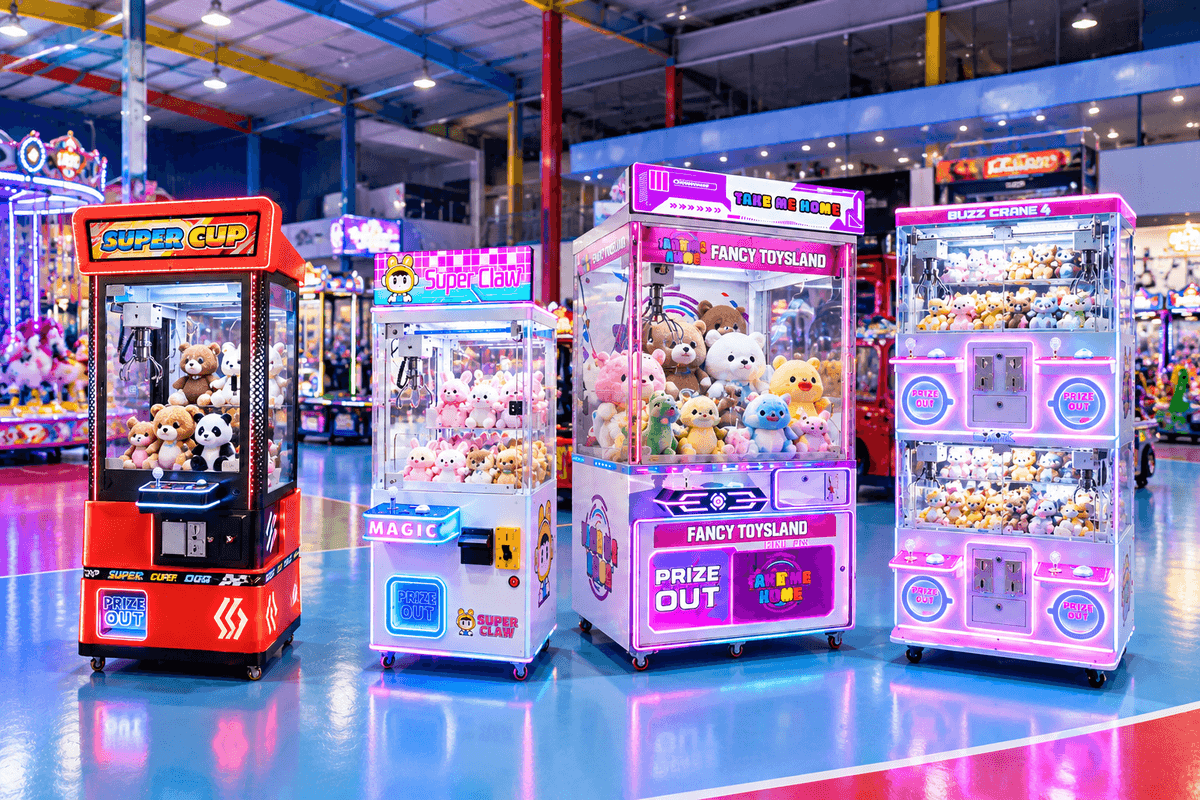
3. Design Loyalty Programs and Value-Based Promotions
Loyalty marketing gives regular visitors an additional reason to choose your venue when they want entertainment.
The best programs are easy to understand, affordable to operate, and compatible with the equipment and payment systems used.
Introduce a Simple Return-Visit Offer
A small arcade might test a promotion in which customers receive a defined discount or complimentary game credit after a specified number of qualifying visits.
For example, an operator could offer one standard game credit after five qualifying visits.
This is an illustrative promotion, not a recommended universal reward level.
The business should clearly explain eligibility, expiration, redemption conditions, and any applicable restrictions.
Consider Membership or Stored-Value Systems
Larger venues may use membership cards or compatible customer accounts to manage eligible discounts, promotional credits, or member benefits.
However, not every claw machine supports the required payment interfaces or account systems.
Before launching a membership campaign, verify compatibility with the machines, payment provider, and management platform.
Offer Value Without Excessive Discounting
Possible campaigns include:
| Promotion | Objective | What to monitor |
|---|---|---|
| Return-visit credit | Encourage another visit | Returning customers and redemption cost |
| Family play package | Support shared visits | Package sales and contribution |
| Off-peak offer | Improve quieter periods | Incremental plays and margin |
| Birthday package | Attract family groups | Bookings and package profitability |
| Member preview event | Introduce new prize collections | Attendance and repeat activity |
A promotion should deliver value while leaving enough contribution to cover prize expenses, payment costs, and venue operations.
Avoid stacking discounts without measuring their effect on profit.
Keep Loyalty Participation Optional
Customers should understand the program before joining.
If it involves collecting personal information, obtain the necessary permission, explain how the data will be used, and follow applicable privacy requirements.
For family-focused venues, it is generally more practical to communicate with parents or guardians rather than collect marketing information directly from young children.
4. Run Seasonal Events and Local Partnerships
A physical entertainment venue can use its local community as an advantage.
Seasonal events and nearby business partnerships create new opportunities to reach customers who may not discover the machines through ordinary foot traffic.
Plan Seasonal Prize Campaigns
Common seasonal opportunities include school holidays, local festivals, family-oriented weekends, and major shopping periods.
A campaign might combine a themed prize assortment, coordinated cabinet decoration, and a clearly advertised event date.
Plan early enough to confirm merchandise availability, production lead times, staffing, and promotional material.
Work with Nearby Businesses
Potential partners include:
- Shopping malls and retail stores
- Family restaurants and cafés
- Cinemas and entertainment centers
- Indoor playground operators
- Event organizers
- Hotels and family-oriented venues
For example, a restaurant and nearby claw machine arcade could collaborate on a family entertainment package with clearly stated pricing and conditions.
A shopping mall might include the arcade in a family event calendar or venue-wide promotional campaign.
Partnerships should benefit both businesses and be appropriate for the intended audience.
Host Small Community Activities
Some venues may organize supervised skill demonstrations, new-prize previews, or family activity sessions.
Event rules should be clear, and staff should be trained to manage queues, equipment use, and customer questions.
If an activity involves a prize draw or sweepstakes rather than ordinary paid gameplay, check the relevant promotional contest rules before launch.
Measure Partnership Results
Use campaign-specific codes, partner referral tracking, or clearly defined booking records where appropriate.
A partnership that creates more traffic but requires excessive discounts or staffing may not generate a positive financial result.
The goal is incremental contribution, not attendance alone.
5. Turn Social Media into Local Visits
Claw machines are naturally visual. Colorful prizes, moving claws, and authentic customer celebrations can work well in short videos and photographs.
Social media marketing is most useful when it shows the actual customer experience and provides clear information about where and when people can visit.
Create Content Around Real Experiences
Useful content ideas include:
- Short videos introducing new prize collections
- Behind-the-scenes restocking
- Machine setup and maintenance demonstrations
- Venue tours
- Staff explaining how a game works
- Announcements for upcoming themed events
- Customer experiences shared with permission
Avoid staging content that misrepresents actual winning chances or implies a prize is guaranteed.
For footage showing identifiable customers, especially children, obtain appropriate consent before publishing.
Use Local Discovery Channels
A verified Google Business Profile can help eligible physical venues share accurate location information, opening hours, photographs, and updates.
Google's Business Profile posting guidance explains how businesses can publish updates, offers, and events that may appear on Google Search and Maps.
Keep the venue information current so interested customers can find the correct location and operating hours.
Encourage Authentic Customer Content
Visitors may want to share their prize wins or group experiences.
Provide a recognizable venue name or optional social hashtag, but respect customers who prefer not to be photographed.
If you work with local creators, disclose any paid or gifted collaboration as required.
The FTC's influencer disclosure guidance explains that material relationships should be clearly disclosed, including when a creator receives free products or other benefits.
Do Not Pay for Positive Reviews
You can invite customers to leave genuine feedback, but do not offer free plays, discounts, or merchandise in exchange for Google reviews.
Google prohibits incentivized reviews and other forms of rating manipulation.
Respond professionally to genuine positive and negative feedback instead of attempting to control the ratings customers leave.
6. Improve the In-Venue Experience to Support Marketing
Marketing may encourage a first visit, but the on-site experience influences whether customers want to return.
An attractive advertisement cannot compensate for machines that are dirty, unreliable, or confusing to use.
Make Machines Easy to Notice
Place claw machines where customers can see the prize displays without blocking circulation.
Use clear interior lighting, readable instructions, and suitable cabinet graphics.
For a row of machines, coordinated visual design can produce a more consistent appearance than unrelated colors and competing audio.
Make Gameplay Easy to Understand
Players should be able to identify the payment interface, joystick, start control, and prize retrieval point.
Explain game prices and relevant rules clearly.
If a machine malfunctions, provide a convenient way to obtain staff assistance.
Keep Equipment Reliable
Check payment acceptance, claw movement, prize sensors, cabinet panels, and controls routinely.
A customer who experiences repeated equipment failures may be less likely to return, regardless of how attractive the current promotion is.
Create a Comfortable Social Space
Where available space permits, consider family seating, appropriate queue areas, and room for friends to observe a game.
Avoid excessive sound volume or flashing effects, particularly where many machines operate close together.
For FEC operators, claw machines should complement the overall venue rather than create congestion around entrances or other attractions.
7. Market Fairly and Protect Customer Trust
Long-term customer retention depends on trust.
Claw machine marketing should describe the experience accurately and avoid pressuring visitors with misleading claims.
Be Transparent About Prices and Prizes
Display game costs clearly.
If a promotion has eligibility restrictions, expiration dates, or limited quantities, explain them before customers participate.
Do not advertise a guaranteed prize, guaranteed win, or specific winning probability unless the claim is accurate, substantiated, and legally permitted.
Keep Promotions Consistent with Local Rules
Prize games and promotional contests may be regulated differently across markets.
A standard paid claw machine game is not necessarily treated the same way as a prize drawing, sweepstakes, or tournament.
Before running a contest, check relevant rules on entry fees, eligibility, prize values, disclosure, and whether a free entry method is required.
Avoid assuming that a promotion legal in one country is automatically permitted elsewhere.
Handle Customer Data Carefully
Membership programs, birthday promotions, and digital campaigns can involve personal information.
If a U.S.-directed online service collects personal information from children under 13 and falls within COPPA, the FTC's COPPA guidance explains requirements including parental consent, subject to applicable exceptions.
Other markets have their own privacy rules. Operators should verify what applies to their websites, apps, loyalty programs, and promotional activities.
Prioritize Enjoyment Over Pressure
Avoid misleading countdowns, false scarcity, repeated spending prompts, or other tactics designed to pressure vulnerable customers.
For family-oriented venues, provide clear prices, appropriate prize choices, and a comfortable environment where players can decide how much to spend.
A trustworthy experience is a stronger foundation for long-term loyalty than aggressive short-term sales tactics.
8. Build a 30-Day
Claw Machine Marketing Plan
Operators can begin with a small, measurable campaign instead of launching multiple promotions at once.
The following 30-day plan is an example that can be adapted to a single claw machine arcade or a larger FEC.
| Period | Main activity | Action | Measurement |
|---|---|---|---|
| Week 1 | Establish a baseline | Record plays, revenue, prize costs, customer feedback and operating hours | Starting performance |
| Week 2 | Refresh prizes | Introduce a themed collection and improve displays | Plays, revenue and prize demand |
| Week 3 | Promote locally | Publish venue updates and test one small partnership or eligible offer | Referrals and campaign redemptions |
| Week 4 | Review and improve | Compare results, collect feedback and select the next activity | Incremental contribution and return visits |
Week 1: Understand Current Performance
Record daily paid plays, revenue, prize costs, machine uptime, and other expenses.
Where lawful and available, use privacy-conscious visitor or membership records to establish a repeat-visit baseline.
Identify which machines and prize categories already perform well.
Week 2: Make One Visible Improvement
Introduce one clearly defined merchandise refresh or display upgrade.
Keep game prices and operating conditions consistent if your goal is to measure the impact of the prize change.
Photograph the new collection and prepare accurate promotional content.
Week 3: Test One Promotional Channel
Choose a limited campaign, such as a local business partnership, an event announcement, or a permitted return-visit offer.
Give the campaign a clear name and redemption method so results can be tracked.
Avoid launching several unrelated offers that make attribution difficult.
Week 4: Evaluate the Results
Compare results with the baseline, accounting for day-of-week patterns, traffic changes, downtime, and any changes to prize costs.
Continue the campaign only if the results support the business objective.
Marketing improvement is a repeated process of testing, measuring, and adjusting.
9. Track Repeat Visits, Player Engagement, and Marketing ROI
A claw machine marketing campaign should be evaluated using more than social media views or total plays.
Operators need to understand whether it attracted customers, improved their experience, and generated enough additional contribution to justify the expense.
Important Marketing KPIs
| KPI | Calculation or definition | What it tells you |
|---|---|---|
| Paid plays | Number of completed paid games | Total purchased game activity |
| Revenue per paid play | Play revenue ÷ Paid plays | Average revenue per paid game |
| Repeat-visit rate | Returning identified visitors ÷ Eligible baseline visitors × 100% | Customer retention over a defined period |
| Campaign redemption rate | Valid offer redemptions ÷ Eligible offers issued × 100% | Offer usage |
| Prize cost ratio | Cost of prizes awarded ÷ Play revenue × 100% | Merchandise cost pressure |
| Revenue per scheduled hour | Play revenue ÷ Scheduled operating hours | Time-based revenue efficiency |
| Incremental contribution | Additional revenue − Additional relevant costs | Financial result of the change |
| Campaign ROI | Incremental contribution ÷ Campaign investment × 100% | Return relative to defined marketing spend |
A repeat-visit rate requires a legitimate way to identify returning visitors. Machine play counters alone cannot establish how many unique individuals returned.
For anonymous walk-in traffic, operators may need to rely on less precise indicators such as daily plays, campaign redemptions, or customer surveys.
Example: Evaluating a Marketing Campaign
Suppose a hypothetical arcade introduces a new prize collection and runs a local promotional campaign.
After adjusting for comparable operating periods, the operator estimates that the campaign generated 600 additional paid plays at an average revenue of $1.50 per play.
| Campaign factor | Illustrative amount |
|---|---|
| Incremental paid plays | 600 |
| Incremental revenue | $900 |
| Additional prize costs | $180 |
| Additional payment fees | $27 |
| Promotional materials and media | $220 |
| Additional campaign staffing | $120 |
| Estimated incremental contribution | $353 |
The estimated incremental contribution is:
$900 − $180 − $27 − $220 − $120 = $353
If campaign investment is defined as the $220 promotional spend plus $120 additional staffing, then:
Campaign ROI = $353 ÷ $340 × 100% = 103.8%
This is an illustrative calculation, not a forecast or an EPARK customer result.
It also assumes that the 600 additional plays were attributable to the campaign. In practice, changes in foot traffic, weather, holidays, and other factors can affect outcomes.
A test using comparable locations or a suitable control period can improve confidence in the result.
Do Not Confuse Growth with Profit
More paid plays can increase revenue without improving the business's financial contribution.
Discounts, expensive prizes, extra staffing, and advertising costs all need to be considered.
An operator should also watch for the possibility that a promotion merely shifts purchases that existing customers would otherwise have made at the regular price.
The best campaign is one that creates worthwhile incremental business while maintaining a good customer experience.
10. What
Claw Machine Operators Should Ask Equipment Suppliers
Marketing results depend partly on the equipment being used.
Cabinet visibility, prize display, payment compatibility, serviceability, and available game counters can all influence how easily an operator runs and evaluates promotions.
Equipment Features to Evaluate
Before purchasing new commercial claw machines, ask suppliers:
- Can the cabinet appearance, colors, graphics, or lighting be customized?
- Is the prize compartment clearly visible from normal customer positions?
- Which payment methods are compatible with the proposed model?
- Does the controller record paid games, prizes awarded, or other operating data?
- Can authorized staff adjust supported operating settings?
- Are instructions and pricing information easy to display?
- Are replacement components and technical documentation available?
- What after-sales assistance can the supplier provide?
Not every machine supports remote analytics, digital loyalty programs, or integrated promotional software.
Buyers should confirm the functions offered by the actual controller and payment configuration.
A Manufacturer's Perspective: Plan the Marketing Experience Early
From a supplier's perspective, the marketing value of a machine should be considered during product selection and venue planning.
A business targeting families may prioritize friendly cabinet designs, suitable merchandise capacity, and clear operating instructions.
A collectible-focused arcade may prefer a consistent cabinet lineup, flexible prize presentation, and a visually recognizable theme.
A multi-location route operator may place greater value on standardized components, payment compatibility, and easy servicing.
These differences are best discussed before ordering equipment rather than after the venue has opened.
How EPARK Supports Commercial Claw Machine Projects
Guangzhou EPARK Electronic Technology Co., Ltd. is a commercial amusement equipment manufacturer based in Guangzhou, China.
With more than 13 years of industry experience and over 25,000 square meters of factory and showroom space, EPARK supplies claw machines, prize equipment, arcade machines, and related entertainment solutions.
EPARK supports OEM/ODM customization, including cabinet appearance, colors, branding, lighting, and compatible payment configurations, depending on the model and project requirements.
Its broader services include venue planning, 3D design support, equipment configuration, and after-sales technical assistance.
For arcade operators planning a themed claw machine area, these services can help align equipment selection with the intended audience and marketing concept.
Buyers should verify the available configurations, reporting features, and support terms for each machine before purchasing.
For additional venue planning ideas, review EPARK's arcade revenue planning guide.
11. Frequently Asked Questions
What are the best marketing ideas for a claw machine business?
Useful ideas include refreshing prize collections, offering clearly defined loyalty benefits, promoting seasonal events, working with nearby businesses, sharing authentic social media content, and improving the in-store customer experience. Test each approach against its operating cost and results.
How can claw machine operators encourage repeat visits?
Give customers positive reasons to return, such as new merchandise, upcoming themed events, reliable equipment, and optional loyalty offers. Clear pricing and good customer service are equally important.
How often should claw machine prizes be changed?
There is no universal schedule. Review inventory turnover, customer interest, purchase costs, and seasonal demand. Replace poorly performing or worn merchandise as needed, and plan themed rotations that fit the venue's customer base.
Do loyalty programs work for claw machine arcades?
They can support customer retention when benefits are understandable and financially sustainable. Operators should track participation, redeemed benefits, repeat visits, and the program's true incremental contribution.
How should a claw machine business use social media?
Share real prize collections, event announcements, venue updates, and customer experiences with permission. Use location information and clear calls to action, while ensuring that sponsored promotions and claims are transparent.
What promotions work for family entertainment centers?
Potential options include family packages, birthday activities, seasonal prize themes, and partnerships with nearby family-oriented businesses. The right campaign depends on the venue, audience, and local regulations.
How do you calculate a claw machine marketing campaign's ROI?
Estimate the additional contribution generated by the campaign after subtracting additional prize costs, payment fees, staffing, and promotional expenses. Divide that contribution by the defined campaign investment and multiply by 100. Clearly state assumptions and avoid treating all revenue growth as campaign-driven.
Can customized claw machines improve marketing?
Customized cabinet colors, branded graphics, suitable lighting, and consistent prize presentation can help support a venue's visual identity. However, they do not guarantee more visitors or revenue. Their value should be assessed alongside prize appeal, location, reliability, and actual operating data.
12. Conclusion: Build Reasons for Players to Come Back
Successful claw machine marketing is not about one promotion or a short period of higher sales.
It is about creating an entertainment experience that customers recognize, enjoy, and want to revisit.
Regular prize updates, thoughtful loyalty offers, local partnerships, useful social media content, and well-maintained machines can all contribute to stronger customer engagement.
Operators should begin with a clear understanding of their audience, test manageable improvements, and measure both customer response and financial contribution.
Just as importantly, marketing should remain transparent, responsible, and consistent with local regulations.
For arcade owners, FEC operators, and amusement equipment buyers, choosing the right machines can support a more attractive and practical entertainment environment.
EPARK provides commercial claw machines, equipment customization, and arcade project support for different business requirements.
Contact the EPARK team to discuss your planned venue, target customers, machine configurations, and equipment needs.
